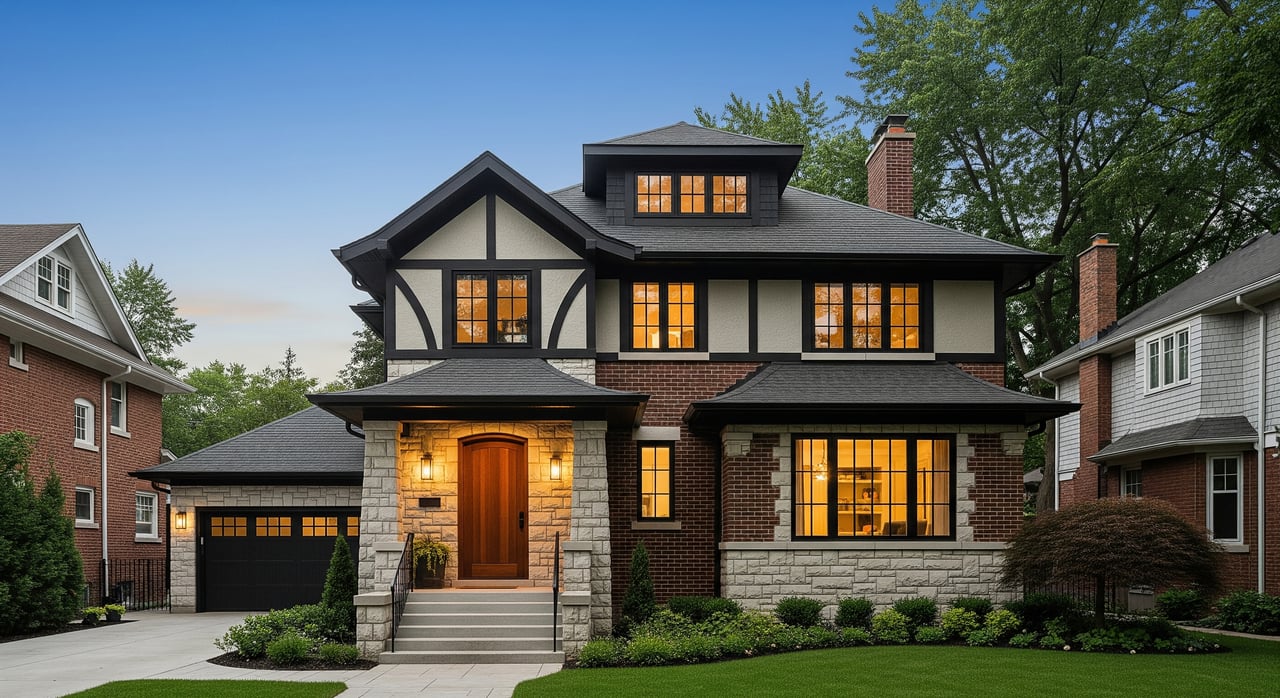
Thinking about listing your Homewood home as winter fades into spring? You’re entering the most active stretch of the year, when more buyers start searching and competition picks up. Getting your price right now can mean faster showings, stronger offers, and a smoother sale.
In this guide, you’ll learn how to set a confident list price using local comps, price bands, and absorption rate, plus how to adjust quickly based on early showing feedback. You’ll also see what data to watch in Homewood so you can stay a step ahead. Let’s dive in.
Why pricing matters in Homewood
Homewood sits within the larger Chicago area, so demand is shaped by regional trends, school boundaries, commute options, and available inventory. When late winter and early spring arrive, more buyers re-enter the market and active listings often increase. That means your pricing needs to balance visibility with value.
Mortgage rates also influence how buyers behave. When rates dip, more buyers can afford to act, which can support firmer pricing. When rates rise, the buyer pool may shrink. To keep a pulse on rate shifts, check the weekly updates from the Freddie Mac Primary Mortgage Market Survey.
Build your pricing baseline
Select the right comps
Start with similar homes as close to your property as possible.
- Look within the same neighborhood or about 1 mile, and keep school boundaries consistent.
- Prioritize closed sales from the last 3–6 months, then review current pending and active listings.
- Match by finished square footage, lot size, bed/bath count, age, and key features like a finished basement or garage.
- Adjust for condition and updates so you compare apples to apples.
Map price bands
Buyers often search in common price brackets. You want to place your home where the most qualified buyers will see it.
- Pull active and pending Homewood listings with the same bed/bath count and similar square footage.
- Note where most listings cluster, and identify common search caps like $300,000 or $350,000.
- Consider pricing just below a common threshold to increase exposure, or price within a band where your home clearly leads on condition or features.
Calculate absorption and supply
These metrics show how fast homes like yours are selling.
- Absorption rate = homes sold in the last 30 days ÷ active listings.
- Months of supply = active listings ÷ monthly sales.
- Interpretation: under 3 months of supply is a seller’s market, 3–6 is balanced, and over 6 favors buyers.
Example: If 10 homes sold in the last 30 days and there are 50 active listings, absorption is 20 percent and months of supply is 5. That is a balanced market, so you should price competitively and be ready for modest concessions if needed.
Track key metrics
Monitor numbers tied to your property type and price band.
- Median sale price and price per square foot over the last 3–12 months.
- Days on market for similar homes.
- Sale-to-list price ratio to gauge negotiation room.
- Showings per listing per week as an early interest signal.
For market context and updates, your agent can source local reports from MRED, the Chicago Association of REALTORS, and Illinois REALTORS. National trend insights are available from the National Association of REALTORS Research.
Use pricing psychology wisely
Anchor value with the list price
Your list price becomes the anchor buyers use to judge value. A higher anchor may signal a premium, but it can shrink your buyer pool. Make sure your photos, feature highlights, and first lines of copy reinforce why your price makes sense.
Choose smart price endings
Some buyers respond to charm pricing like $299,900, while round pricing like $300,000 can feel premium. Review local search behavior, then test the approach that puts your home in more results without sacrificing perceived value.
Pick the right tier strategy
- Perceived-urgency pricing: In a strong seller’s market, listing slightly under likely market value can spark bidding.
- Right-priced launch: Price at competitive market value to drive maximum early showings.
- Avoid overpricing: Extended days on market, reductions, and weak showings can create a negative spiral.
Respond to real-time feedback
The first 14–21 days
Most serious activity happens early. Watch:
- Showings per week compared to similar listings.
- Online views, saves, and messages.
- Themes in agent and buyer feedback about price, condition, layout, or location.
- Any offers and terms.
What feedback means and how to act
- “Price feels high” across several showings:
- Re-check comps and absorption. Consider a 3–5 percent reduction or move to a stronger price band. Refresh staging and lead photos.
- “Needs updates” or condition concerns:
- Tackle high-impact fixes like paint, carpet, or lighting, or offer a buyer credit. Price should reflect condition.
- “Layout or size” challenges:
- Target buyers who value your strengths and align price with similar-floor-plan sales.
- “Too many similar homes priced lower”:
- Differentiate with presentation, a home warranty, or flexible closing, or price match to the lower band.
Timing your next move
- Little to no showings in the first 7–14 days: review marketing and consider a price adjustment if comps support it.
- Showings but no offers after 14–21 days: make a visible reduction to regain attention. If showings are steady, also review terms like closing timeline and contingencies.
- If a competing listing drops price: be ready to respond quickly to maintain your position in the band.
Data to request from your agent
A strong pricing package helps you move with confidence.
- Sold comps from the last 3–6 months in Homewood with sale prices, days on market, and sale-to-list ratios.
- Current active and pending listings in your price band.
- Average showings per listing in your micro-area, if available.
- Recent price reductions and relist histories for comps.
- Local absorption rate and months of supply for your specific tier.
For property-specific details like lot size and tax info, use the Cook County Assessor. Your agent can also provide MLS-based insights from MRED and regional commentary from Illinois REALTORS and the Chicago Association of REALTORS. National trend context is available from NAR Research and weekly rate updates from Freddie Mac PMMS.
How our team supports your pricing
When you price smart, presentation matters even more. Professional staging, standout photography, and clear listing copy help defend your price and attract qualified buyers faster. Our team pairs neighborhood-level expertise in southern Cook County with a premium marketing platform so your home shows at its best from day one.
Ready to set the right price and launch with confidence? Reach out to Larita Thomas to get your free instant home valuation or schedule a consultation.
FAQs
What is the best time to list a Homewood home?
- Late winter and early spring often bring more active buyers and new listings. Use local inventory and absorption data to time your launch for maximum exposure.
How do I choose the right comps in Homewood?
- Focus on closed sales from the last 3–6 months within about 1 mile, with similar size, bed/bath count, and condition. Include pending and active listings as current competition.
What is absorption rate and why does it matter?
- Absorption shows how fast homes sell. Low months of supply favor sellers and support tighter pricing, while higher supply calls for more competitive pricing or concessions.
How big should my first price reduction be?
- If feedback points to price, a 3–5 percent reduction usually makes a meaningful impact. Pair it with refreshed photos or staging to re-energize buyer interest.
Should I price under a round-number threshold?
- Pricing just below common caps can put your home in more searches. Choose a threshold that aligns with your comps and keeps your home at the top of its price band.